



From Dinghies to the Ocean: Different Types of Sailboats, Different Ways to Experience the Sea

×

What does your first tack on an Optimist have in common with a night in the Atlantic aboard an IMOCA? The basics, probably: reading the wind, trimming a sail, holding a course. Beyond that, they're worlds apart.
Sailing isn't one single sport: it comes in many forms and shapes. Each one has its own ways of being on water, its own types of sailboats and its own technical gear, built for the job. Every discipline tells a different story, and the one you practice shapes the relationship you'll have with the sea.

It all starts here. For many sailors, the first real contact with the sea happens on an Optimist: the boat synonymous with sailing school and a first taste of racing. As you grow, you move on to livelier, more responsive sailing dinghies, single- or double-handed, like the OpenSkiff, ILCA 4, RS Feva, 420 and 29er.
These classes teach you the fundamentals: reading the wind, steering the boat, keeping your balance, nailing a start, learning the first racing rules and building tactical instinct. There's no better place to learn how to sail. Single-handers build independence and control, while doubles introduce teamwork and coordinated manoeuvres.
In spring and summer, the essentials are lycra tops, technical tees and caps. As it gets cooler, spray tops, neoprene and thermal layers come into play. For clubs and teams, coordinated kit (bermuda shorts, polos and junior jackets) also matters for prize-givings and formal moments.
There's just one rule: complete freedom of movement.
Le T-shirt à capuche OD Jr Tech vous protège dans diverses conditions climatiques, offrant une protection totale de 50+ UPF. Que ce soit pour les journées d'entraînement ou les régates, il dispose d'une capuche à col haut intégrée, qui peut être ajustée en trois positions. Léger et respirant, il est fabriqué à partir de tissu stretch recyclé, coupe-vent et durable. Parfait pour vos sorties sous un temps chaud et ensoleillé.

Idéal pour ceux qui passent des heures sous le soleil sur un bateau ou en surf, le Foil Jr Rashguard LS Lycra offre une protection UV, de l'élasticité et une résistance à l'abrasion. Avec une coupe ajustée et à séchage rapide ainsi que des coutures plates, il garantit une liberté de mouvement tout en évitant les irritations de la peau.
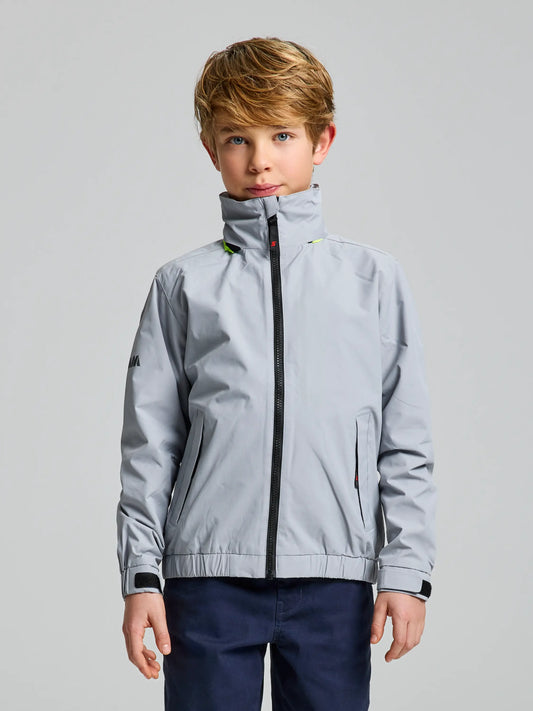
Veste en tissu imperméable et coupe-vent de voile emblématique, adaptée à de nombreuses occasions, même à terre. La Kid Sailing Jacket est idéale pour les équipes de compétition de club, qui peuvent la personnaliser avec une broderie de leur fanion.
La Jr Sailing Warm Jacket est le vêtement parfait pour l'enfant qui est à l'extérieur et qui peut porter un vêtement chaud, mais résistant à l'eau, au vent et au froid, en nylon Taslon 228T robuste mais léger.

Foiling is one of the newest developments in sailing. Wingfoil, windsurf foil, iQFOiL, kite foil, WASZP, Switch and other single- or double-handed boats, right up to the Olympic Nacra 17, lift the hull clear of the water and take sailing somewhere faster, more physical and more reactive. Everything speeds up, every shift of weight changes the trim, and a mistake costs you instantly. More than strength, it takes anticipation: reading the wave a moment before it arrives.
Foiling gear comes down to three things: close-fitting, stretchy, stable. It has to move with the body without ever getting in the way, and protect against wind, water, impact and UV.
In spring and summer, think lightweight pieces, rashguards, technical shorts and UV protection. When it gets colder, neoprene, long johns and thermal tops become essential.

Foil Aero Top est le vêtement le plus avancé que nous ayons jamais développé pour le foil. Né du travail mené avec les athlètes olympiques Tita–Banti, il utilise des tissus aérodynamiques testés en soufflerie afin de réduire les turbulences et de rester stable sur le corps lorsque les vitesses deviennent très élevées.

Foil Aero Bib est la salopette aérodynamique développée pour les navigateurs évoluant sur des bateaux à foils à très haute vitesse. Compression, stabilité et protection travaillent ensemble pour soutenir le corps et réduire la résistance de l’air lorsque l’on est totalement exposé au flux.

Foil Board Short 2.0 est un short technique conçu pour les disciplines foil. Liberté de mouvement, séchage rapide et protection solaire UPF 50+ en font un choix idéal pour les sessions intenses, avec une construction pensée pour résister au contact continu avec le bateau.

Single-handed dinghies like the ILCA 6 and ILCA 7, doubles like the 470 Mixed, fast skiffs like the 49er and 49erFX, iQFOiL boards, Formula Kite and foiling catamarans like the Nacra 17 make up an extraordinarily varied field. A reminder of just how many types of sailing boats the sport holds.
Each class calls for its own skills. In single-handers it comes down to helming, physical stamina and tactical reading. In doubles, communication and clear roles are decisive. In skiffs and foiling multihulls, speed demands precision, balance and quick reactions. Boards and kites add an even more athletic dimension, tied to body control and handling power.
The discipline may change, but the logic always stays the same: lightweight fabrics, freedom of movement, breathability, fit.
In summer, you should choose UV-protective pieces that dry fast and are built for intense activity. As temperatures fall, base layers, long johns, spray tops and technical midlayers become more and more important.
Crew Sunblock SS 2.0 est un t-shirt technique à manches courtes conçu comme première couche pour la protection solaire lors des activités à bord. Léger, confortable et doté d’un traitement anti-UV UPF 40+, il est pensé pour une utilisation prolongée pendant les journées chaudes.
Crew Sunblock LS 2.0 est un t-shirt technique à manches longues conçu comme première couche pour la protection solaire en navigation. Il offre confort, respirabilité et une protection anti-UV UPF 40+ pour une utilisation prolongée sous le soleil.

OD Tech Polo est un polo technique conçu pour la voile active estivale. Réalisé dans un tissu léger et respirant, il associe hautes performances, protection solaire UPF 50+ et design épuré, idéal pour une activité intense à bord.

OD WS Tech Polo es un polo técnico diseñado para la vela de verano. Confeccionado en un tejido ligero y altamente transpirable, combina alto rendimiento, protección solar UPF 50+ y un diseño limpio, ideal para la actividad intensa a bordo.
Le polo Drirelease One Design LS est un polo technique aux qualités inattendues. Doux comme du coton, ce vêtement est aussi performant qu'un maillot de course : respirant et léger, il sèche rapidement. Lorsqu'il fait très chaud et que vous êtes exposé au soleil pendant des heures, ce polo est idéal pour vous protéger du soleil. Confortable, sec et frais.

From dinghy to team boat: the RS21, Melges 24, J/70, SB20 and Este 24 – small one-design keelboats – mark the step from single-handed sailing to crewed racing. These boats stay compact and responsive, but sailing becomes a collective effort. Everyone aboard has a precise role, and every manoeuvre demands coordination.
Racing is usually close, technical and tactical. Starts, crossings, hoists, drops, side changes and trim have to be executed with precision. The boat moves thanks to the crew's work and its ability to hold speed and trim through every phase.
Here the gear you wear has to keep up with the pace of racing and the intensity of the manoeuvres, while matching the crew's coordinated look. Technical polos, gilets, softshells, light jackets, salopettes, deck shoes and accessories are the building blocks of a complete kit.
In summer, breathability, sun protection and quick drying come first. When wind and cold pick up, you turn instead to waterproof pieces, base layers, midlayers and more structured protection.
OD Tech Polo est un polo technique conçu pour la voile active estivale. Réalisé dans un tissu léger et respirant, il associe hautes performances, protection solaire UPF 50+ et design épuré, idéal pour une activité intense à bord.
OD WS Tech Polo es un polo técnico diseñado para la vela de verano. Confeccionado en un tejido ligero y altamente transpirable, combina alto rendimiento, protección solar UPF 50+ y un diseño limpio, ideal para la actividad intensa a bordo.

Altura Tech Short est un bermuda technique de voile conçu pour le travail quotidien à bord. Réalisé en tissu stretch double weave à haute résistance à l’abrasion, il associe robustesse, confort et stabilité, et se positionne comme l’évolution estivale du pantalon Pro Tech.

Altura WS Tech Short est un bermuda technique de voile conçu pour le travail quotidien à bord. Réalisé en tissu stretch double weave à haute résistance à l’abrasion, il allie robustesse, confort et stabilité, représentant l’évolution estivale du pantalon Pro Tech en version féminine.

Altura Amphibio Short est un bermuda technique à vocation amphibie, conçu pour évoluer naturellement entre le bateau, l’eau et la terre. Léger, confortable et à séchage rapide, il est pensé pour accompagner l’activité lors des journées les plus chaudes.

OD Shoes sont les chaussures One Design à porter lorsque perdre de l’adhérence à bord n’est pas une option. Légères, respirantes et incroyablement stables, elles sont conçues pour offrir grip, contrôle et confort réel sur le pont, même lorsque le bateau est fortement gîté et que les manœuvres deviennent physiques.
Un vêtement quatre-saisons conçu pour toutes vos sorties. Sa fermeture éclair intégrale, ses deux poches latérales et sa structure intérieure en polaire quadrillée font de cette polaire une solution chaude et respirante, à porter seule ou sous un gilet ou une veste. Sur le pont, à terre ou en voyage, soyez toujours bien équipé.
Un vêtement quatre-saisons conçu pour toutes vos sorties. Sa fermeture éclair intégrale, ses deux poches latérales et sa structure intérieure en polaire quadrillée font de cette polaire une solution chaude et respirante, à porter seule ou sous un gilet ou une veste. Sur le pont, à terre ou en voyage, soyez toujours bien équipée.

OD Long John est la salopette imperméable pensée pour ceux qui régatent réellement en One Design. Elle protège de l’eau et du vent lorsque le bateau accélère, tout en conservant une coupe ajustée, une grande liberté de mouvement et un confort optimal même lors des manœuvres les plus dynamiques. DÉCOUVREZ-EN PLUS SUR CE PRODUIT

Le gilet One Design Hybrid est conçu pour s'adapter parfaitement sous une veste ou au-dessus d’une première couche. Rembourré en tissu Primaloft, léger et extensible, il offre une coupe ajustée et protège le torse et le dos tout en vous offrant une liberté de mouvement optimale. Idéal même seul après une course.

Big one-designs and maxi yachts take crewed sailing to another level. The ClubSwan, Swan One Design, TP52, Maxi and other international-circuit boats demand organisation, precision and highly specialised roles.
On board, there are large crews, often with expert technical backgrounds. From sail trim to weight management, every manoeuvre involves several people, and every detail can shape speed. It's powerful, orderly sailing, where performance is the product of the whole crew working as one.
Technical gear has to answer both the demands of racing and the crew's coordinated image. Technical polos, gilets, softshells, light jackets, bibs, deck shoes and accessories all become part of a complete kit.
In summer, breathability, sun protection and quick drying come first. In autumn and winter, you need waterproof garments, base layers, midlayers and more protection.
Tech Piqué Shirt LS est un polo technique à manches longues conçu pour la voile et pour les moments qui l’accompagnent. Le tissu piqué respirant, la protection solaire UPF 50+ et la coupe regular le rendent adapté à l’activité à bord, à la vie de ponton et aux contextes de représentation liés à la régate.

Altura QD Polo est un polo technique à séchage rapide conçu pour la voile estivale et les activités prolongées par temps chaud. Léger, respirant et à séchage rapide, il offre confort et protection solaire UPF 20+ tout en conservant une allure soignée.

Crew Shoes est la chaussure technique conçue pour équiper les équipages et les teams avec un look épuré, uniforme et élégant, sans renoncer au confort, à l’adhérence et à la fonctionnalité. Une solution unique pour ceux qui recherchent une cohérence esthétique et des performances réelles à bord comme à terre.

L’Altura Jacket est une veste imperméable et respirante conçue pour la navigation côtière et les régates hivernales. Son haut niveau de protection, son confort et son design reconnaissable en font une référence pour un usage fréquent à bord et lors des journées les plus froides.

Altura Bib est la salopette imperméable conçue pour la voile côtière et les régates hivernales. Elle offre une protection fiable, un confort durable et une grande liberté de mouvement, et constitue le complément naturel de l’Altura Jacket pour faire face à des conditions hivernales variables.
Here you step into a different dimension. You're no longer sailing just around the buoys, but along longer courses. Often near the coast, among islands, headlands, wind shifts and changeable weather.
The main difference between these kinds of racing is mainly the amount of time spent at sea. A coastal race might last a few hours, a short offshore leg can run into the night, while true offshore sailing calls for watches, managing fatigue, attention to safety and the ability to handle shifting conditions.
In the warmer months, the essentials are quick-dry polos, technical shorts, hats, sunglasses and UV protection.
When wind, cold or longer passages set in, base layers, midlayers, a waterproof jacket, salopettes, gloves, thermal hats and offshore-grade life jackets all come into play.
Altura QD Polo est un polo technique à séchage rapide conçu pour la voile estivale et les activités prolongées par temps chaud. Léger, respirant et à séchage rapide, il offre confort et protection solaire UPF 20+ tout en conservant une allure soignée.
Altura Tech Short est un bermuda technique de voile conçu pour le travail quotidien à bord. Réalisé en tissu stretch double weave à haute résistance à l’abrasion, il associe robustesse, confort et stabilité, et se positionne comme l’évolution estivale du pantalon Pro Tech.
Altura WS Tech Short est un bermuda technique de voile conçu pour le travail quotidien à bord. Réalisé en tissu stretch double weave à haute résistance à l’abrasion, il allie robustesse, confort et stabilité, représentant l’évolution estivale du pantalon Pro Tech en version féminine.
Altura Amphibio Short est un bermuda technique à vocation amphibie, conçu pour évoluer naturellement entre le bateau, l’eau et la terre. Léger, confortable et à séchage rapide, il est pensé pour accompagner l’activité lors des journées les plus chaudes.

OD Visor est la visière technique de la collection One Design, conçue pour offrir une protection solaire efficace du visage, de la légèreté et de la stabilité en navigation. Idéale pour les journées les plus chaudes et pour une activité sportive intense à bord.
L’Altura Jacket est une veste imperméable et respirante conçue pour la navigation côtière et les régates hivernales. Son haut niveau de protection, son confort et son design reconnaissable en font une référence pour un usage fréquent à bord et lors des journées les plus froides.
Altura Bib est la salopette imperméable conçue pour la voile côtière et les régates hivernales. Elle offre une protection fiable, un confort durable et une grande liberté de mouvement, et constitue le complément naturel de l’Altura Jacket pour faire face à des conditions hivernales variables.
Le gilet One Design Hybrid est conçu pour s'adapter parfaitement sous une veste ou au-dessus d’une première couche. Rembourré en tissu Primaloft, léger et extensible, il offre une coupe ajustée et protège le torse et le dos tout en vous offrant une liberté de mouvement optimale. Idéal même seul après une course.
Altura Lifejacket 170N est le gilet de sauvetage automatique conçu pour la navigation hauturière. Il offre des standards de sécurité élevés, un confort évolué et une liberté de mouvement maximale, grâce à une construction compacte certifiée selon les normes internationales les plus strictes.

The Mini 6.50, Figaro, Class40, IMOCA, Ultim and the boats racing in events like the Vendée Globe and The Ocean Race take on enormous distances, brutal conditions and long stretches far from land.
Here the boat becomes a place of work, life and endurance. The sailor has to manage course, weather, sails, energy, sleep, safety and maintenance. Conditions can turn fast, and you're constantly exposed to water, wind and cold.
Ocean gear has to protect over long stretches at sea, even months. Offshore oilskins, high-waisted bibs, thermal base layers, warm midlayers, boots, gloves, hoods, high collars, reflective details and safety systems all become indispensable. The main goal is to stay dry, warm and sharp even after many hours on deck.

L’Ocean Jacket est la veste de quart hauturière la plus technique développée par SLAM. Conçue et testée aux côtés de navigateurs engagés dans les défis océaniques les plus exigeants, elle associe protection extrême, confort et légèreté dans un vêtement pensé pour affronter des conditions en perpétuelle évolution, sur le pont comme à l’intérieur.

Ocean Bib est le pantalon à bretelles océanique le plus technique développé par SLAM. Conçu et testé aux côtés de navigateurs engagés dans les défis océaniques les plus exigeants de la planète, il offre une protection totale, un confort durable et une grande liberté de mouvement dans des conditions en constante évolution.
From the Optimist to ocean racing, every one of these types of sailboats and disciplines tells a different way of experiencing the sea. Some disciplines teach you the first manoeuvres, other ones allow you to fly on the water, Olympic ones are built on precision and intensity. Then the one-design world, where the where the crew works as a single team, and offshore sailing, where the passage is measured in time, endurance and the ability to read ever-changing conditions.
The speed, the type of sailboat, the roles on board all change, but one thing is always the same: the direct, unfiltered relationship with the sea.