



Across the Oceans to Cape Horn

×
Cape Horn is now astern for The Famous Project CIC. A historic all-female oceanic achievement, lived mile after mile with SLAM as technical partner
There are feats that change their meaning while they are still unfolding. They begin as a sporting challenge, become an extreme experience, and ultimately take on a value that goes beyond the stopwatch, beyond rankings, even beyond the original goal.
The non-stop round-the-world voyage of The Famous Project CIC has entered precisely this dimension.
Departing from Ushant at the end of November, eight women aboard a maxi trimaran set their bow toward the most demanding oceans on the planet with a clear idea: to prove that an all-female crew can take on, together, one of the most radical challenges in ocean sailing. Today, after more than a month at sea and nearly sixteen thousand miles sailed, that vision is no longer just a project. It is a tangible reality, lived and earned mile after mile.
The start is decisive. The Atlantic is crossed with pace and determination, in a style of sailing that immediately highlights the collective nature of this project. Eight different backgrounds merge into a single system of decision-making, listening and shared responsibility.
It is a dynamic that will accompany the entire circumnavigation. Nothing is left to chance, nothing is ever purely individual.

© Deborah Blair QUOTE: DEE CAFFARI

The first days of racing pass quickly. The Atlantic is crossed with rhythm and confidence, up to the first great watershed of the round-the-world route: the Cape of Good Hope. It is there that the journey changes face. Temperatures drop, waves grow, the wind becomes steadier and harsher. From that moment on, nothing is merely “in transit.” Every decision carries weight.
The Indian Ocean welcomes the crew with its reputation intact: heavy seas, powerful low-pressure systems, and complex currents such as the Agulhas. It is here that one of the recurring themes of this adventure emerges: a serious technical issue, the blocked mainsail hook, which limits the use of the mainsail just when the boat would need to express its full potential.
The choice is both difficult and clear-headed. Stopping would jeopardise the entire endeavour. Continuing means accepting the limitation, adapting, reinventing the way of sailing. The eight sailors choose to go on. Not out of recklessness, but out of conviction. From that moment on, every mile counts twice.

©Deborah Blair QUOTE: ALEXIA BARRIER

©Deborah Blair
Rounding Cape Leeuwin at Christmas marks the second major geographical reference of the round-the-world route. A symbolic moment, celebrated in the open ocean, far from everything, yet full of meaning. From there on, the South Pacific becomes the new stage of the challenge.
It is a very different ocean from how it is often imagined. There is nothing “pacific” about its southern latitudes. The wind strengthens, the sea becomes disorganised, the boat’s motion never gives respite. Days unfold in a constant balance between pushing and preserving, between speed and the survival of the platform. The handling of the trimaran grows ever more precise. Manoeuvres become sharper. The crew grows. They sail tired, cold, sometimes under snow, but always focused, present, united.

@Deborah Blair QUOTE: ANNEMIEKE BES

© Deborah Blair
In the heart of the Pacific, The Famous Project CIC crosses one of the most extreme places on Earth: Point Nemo. It is the point in the ocean farthest from any landmass, the so-called maritime pole of inaccessibility. Thousands of kilometres from any coast, no possible assistance, no reference points.
Point Nemo is also a place of memory. Here, in 1998, the first all-female attempt at the Jules Verne Trophy came to an abrupt end. Passing beyond it means assuming responsibility, not claiming a record. It is a silent threshold, preparing the way for the most meaningful passage of all.

QUOTE: DEBORAH BLAIR
After Point Nemo, the Pacific reveals its most severe face. Gusts exceeding fifty knots, waves over eight metres high, chaotic and violent seas. The maxi trimaran accelerates, decelerates, surfs down the waves like wild slopes. The crew is pushed to its physical and mental limits.
Once again, the mainsail issue forces complex choices. At times it is necessary to “run away” to reduce or increase sail. At others, it is vital to pause for a moment longer, breathe, observe. This is a form of sailing driven by intelligence rather than brute force. Cold, humidity, snow, cross seas. The days are intense, often exceeding 550 miles in 24 hours, on a deliberately more northerly route chosen to avoid the most violent Southern Ocean depressions.

It is a moment destined to remain in the history of ocean racing. Never before had an all-female crew rounded Cape Horn in a non-stop multihull race. This passage is not merely geographical, but deeply symbolic. It is not a loud conquest. It is a crossing made of respect, consistency and continuity.
With this milestone, The Famous Project CIC enters a very small circle. Few women in history have included Cape Horn in a non-stop circumnavigation, whether solo or crewed. Even fewer have done so under these conditions, on a maxi multihull, without assistance.
For some of the sailors on board, this achievement also carries a unique personal meaning: firsts for their respective countries, generational milestones, experiences that define a career and a life.


CAPE HORN @ Deborah Blair

Now the bow points north-east. The Atlantic awaits, with its hazards and unpredictability. The finish is still far away and the round-the-world voyage is not over. But one thing is now clear: this achievement already carries enormous historical weight, regardless of any final record.
Throughout this journey, SLAM has been an integral part of the adventure. Not as a distant presence, but as a real technical partner on board, through night watches, manoeuvres in strong winds, hours of cold and constant humidity. Garments designed to endure, protect and accompany. Tested in the most authentic way possible: by living the ocean, without filters.
Alexia Barrier logbook:"Cape Horn is not a GPS point. It is a passing of the baton, between the sailors of yesterday, those of today, and those who are still dreaming. You don’t ‘pass’ Cape Horn. You are allowed to continue... Here everything is immense. Sometimes magnificent, sometimes frightening. The Great South takes you, shakes you, reminds you how small you are...You never round Cape Horn alone. You cross it with all those who believe in you. Their words reach the boat. They warm you. They carry you".
The Great South takes its leave with its unreal light, the wind, the snow, the immense power of the ocean.
From the most remote point on the planet to Cape Horn, The Famous Project CIC has already crossed boundaries far beyond the nautical chart. Now the Atlantic remains.
But what these women have built, mile after mile, is already something that will endure. In this extreme journey, SLAM is on board as technical partner, with gear designed to withstand cold, wind and constant humidity, tested day after day in the harshest seas on the planet. A real, lived, essential support.
From the most remote point on Earth to Cape Horn, The Famous Project CIC has gone far beyond the boundaries of the chart. Now the Atlantic lies ahead. But what these women have built, mile after mile, will remain.
Press Sources: thefamousproject.io; yacht.de, sail-world.com

©Deborah Blair
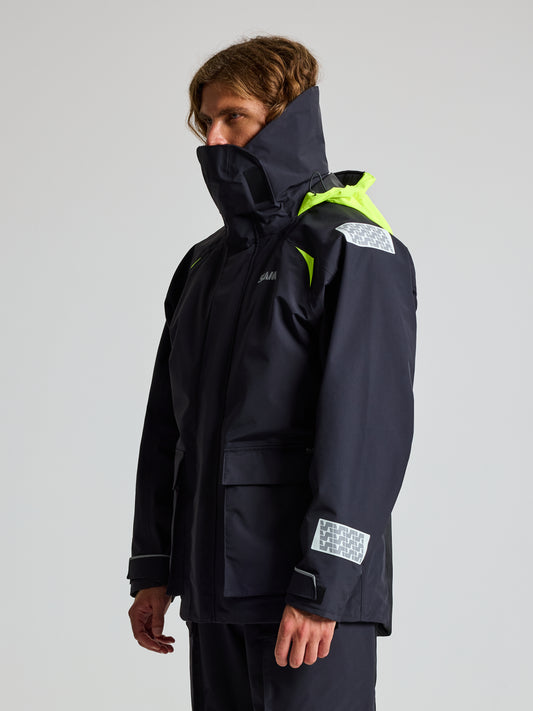
Für diejenigen, die navigieren, ist es von grundlegender Bedeutung, auch die geeignete Kleidung für die Bedingungen zu haben, mit denen das Meer aufwarten kann. Die Pro Offshore Jacket schützt mit ihrer Undurchlässigkeit (15000 mm), der einziehbaren, hochsichtbaren Kapuze und dem warmen, gefütterten Stehkragen vor Wind, Wasser, Salz und Regen.
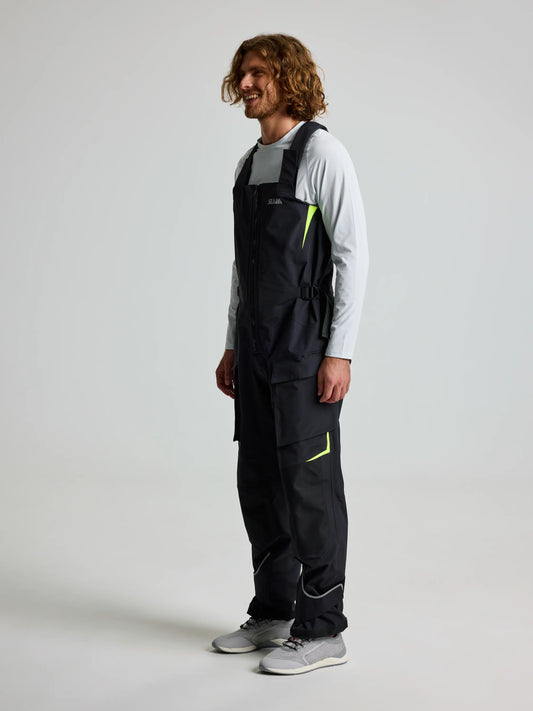
Die Pro Offshore Bibs ist die Unisex-Latzhose aus recyceltem, undurchlässigem (15000 mm) und atmungsaktivem Material und wurde für diejenigen entwickelt, die ein Kleidungsstück möchten, das sowohl allein als Schutz für Beine und Oberkörper als auch mit einer Jacke kombiniert getragen werden kann.
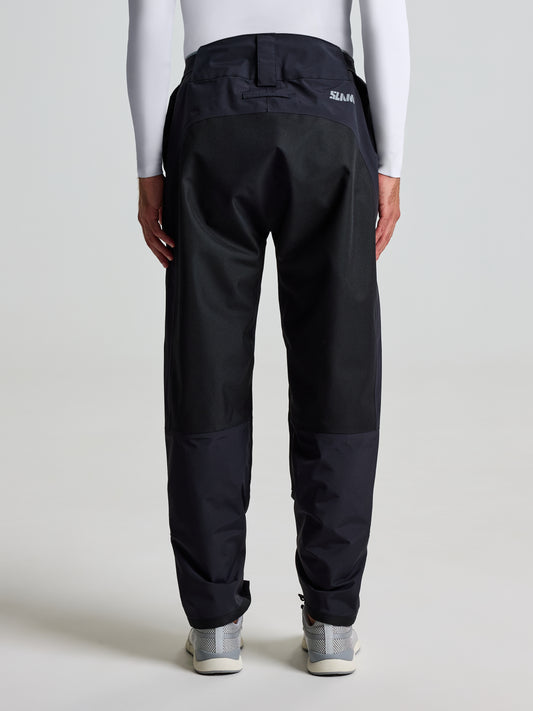
Als praktische Hose aus 2-Layer-Tech-Nylon ist die Pro Offshore Pant ideal für diejenigen, die nach einem Schutz vor Wasser, Wind und Regen für die unteren Gliedmaßen ohne Latz Ausschau hält.