


It's history!

×
In the previous chapter, The Famous Project had already written a page of history by rounding Cape Horn.
In this article, we look back at what these extraordinary women had to face in the second half of the journey: a month and a half of real ocean sailing, made of decisions, adaptations and unexpected challenges. With intelligence, experience and resilience, they managed every situation - from weather strategy to the boat’s technical limits - bringing the challenge to completion with clarity and team spirit, even when sea, wind and conditions were pushing everything to the limit.
After Cape Horn, the ocean changes face and perspective shifts. For The Famous Project CIC, the rounding on January 6 was not just a waypoint on the chart, but a symbolic threshold. From that moment on, the achievement had already entered history. Yet the final part of the voyage, towards France, became a lesson in “intelligent” ocean sailing, built on transitions, routing choices and clear priorities: safety first.
In the days following Cape Horn, IDEC SPORT quickly began to pile up the miles again on long, fast starboard tacks. They passed Isla de los Estados, then the Falklands, and climbed north along Argentina driven by strong southerly winds. The pace was high, but it was the atmosphere on board that revealed the real shift in phase.

© Deborah Blair QUOTE: ALEXIA BARRIER

The Atlantic never offers a straight-line return. The first major high-pressure systems appear, to be skirted carefully without getting trapped in their windless cores. This is where the team’s clarity and discipline stand out, along with their ability not to chase a perfect number.
“The Atlantic is an ocean we know how to read better… the strategy remains subtle, almost like a game of chess.”
And above all: "We are not fixated on a number. The goal is to sail safely, protect the boat and the crew.”

©Deborah Blair QUOTE: ALEXIA BARRIER
During a light-wind phase, the crew discovered serious damage to the starboard foil, now delaminated and unusable. The response was immediate and rational: the foil was raised, secured, and the race continued without drama. After all, IDEC SPORT was originally designed before the foil era.

©Deborah Blair
On Day 48 they crossed the Equator, a symbolic milestone and the start of the final leg towards Europe. But the ITCZ, with its storms and wind holes, once again tested the crew. It also brought back the most delicate issue of the entire circumnavigation: the mainsail hook, which makes every reefing maneuver long and costly. On Day 49, during a maneuver, a tear also appeared along the leech of the mainsail.

@Deborah Blair

© Deborah Blair
Heading further north, the sailing becomes more unstable and strategic: systems chasing each other, growing seas, and the finish drawing closer. Fatigue is real, but clarity remains.
“We’re tired… but above all we’re clear-headed and calm. Because we know why we’re here.”

In the final stretch, with winter storms and prohibitive seas ahead, the team chooses not to “challenge the worst” but to wait for a more manageable window, listening to reason. This is where the true value of the project becomes even clearer: in the ocean, it is not those who risk the most who win, but those who choose best.
Dee Caffari sums it up with a sentence that sounds like a manifesto:
“If it were easy, everyone would do it.”

Copyright : Mark Lloyd / JM Liot.
Merci
The final leg toward France was not a simple climb back up the Atlantic. It became a real, unfiltered test. First the starboard foil was no longer usable. Then the mainsail hook became increasingly critical. Finally came the hardest blow: the mainsail gave way completely, torn and no longer hoistable.
IDEC SPORT continued toward the finish in a reduced configuration, relying only on the wing mast and headsails, while the North Atlantic prepared its winter finale. It is in this scenario that you truly understand what technical gear under real stress means: deck maneuvers in heavy seas, continuous watch rotations, constant humidity, the cold of the South, then equatorial heat, then storms again.
SLAM is part of this reality as a technical partner, not a distant presence. Garments designed to protect, move, breathe and dry quickly, worn for weeks in the harshest conditions on the planet. Real feedback is born here: during night sail changes, improvised repairs, and sailing in minimal sail configuration.
In the ocean, it is not who pushes hardest who wins, but who manages best. Those who know how to wait, choose the right weather window, and put safety before the stopwatch. It is the same philosophy that drives technical development: not chasing the extreme, but being ready when the extreme truly arrives.
And that is why this challenge speaks the same language as SLAM.


Copyright : Mark Lloyd / JM Liot.
Merci
On Monday, January 26, 2026, at 12:00, between Ushant and the Lizard, Alexia Barrier, Dee Caffari, Annemieke Bes, Rebecca Gmür Hornell, Deborah Blair, Molly LaPointe, Támara Echegoyen and Stacey Jackson, aboard IDEC SPORT for The Famous Project CIC, crossed the finish line of the Jules Verne Trophy course after 57 days, 22 hours and 20 minutes of non-stop sailing.
It is not an outright record time, but it is nonetheless a historic achievement: the first all-female crew ever to complete the Jules Verne non-stop circumnavigation, and the first time in history that an all-women team has sailed a maxi trimaran around the world without stopping. The previous all-female attempt, led by Tracy Edwards, ended in the Southern Ocean. In total, only 14 women sailors had ever previously attempted a Jules Verne circumnavigation.
IDEC SPORT, a design over twenty years old and born before the foiling era, proved how reliability, skill and management can matter as much as pure speed. From the very start, through mainsail hook issues, foil damage and systems pushed to their limits, the crew never once spoke of retirement. The goal was clear: to open a path.
And that path now exists.
From the pioneers of yesterday to these eight women, who turned an attempt into a concrete achievement, the meaning goes far beyond the final time. It is a powerful signal for offshore sailing and for sport itself: the limit is no longer where we thought it was..

Copyright : Mark Lloyd / JM Liot.
Merci
While The Famous Project CIC were less than a day from the finish line, Sunday on board was also marked by another historic moment in offshore sailing. The eight sailors congratulated the crew of Sodebo Ultim 3, who in those very hours set the new Jules Verne Trophy record, completing the non-stop circumnavigation in 40 days, 10 hours and 45 minutes, the fastest round-the-world time ever achieved.
An extraordinary achievement, built on performance, strategy and teamwork at the highest level, fitting into the same great oceanic stage where The Famous Project has written its own page of history. Two different feats, united by the same horizon: the non-stop lap of the globe, where the ocean remains the only true judge.
Press Sources: thefamousproject.io; sail-world.com: yachtingworld.com

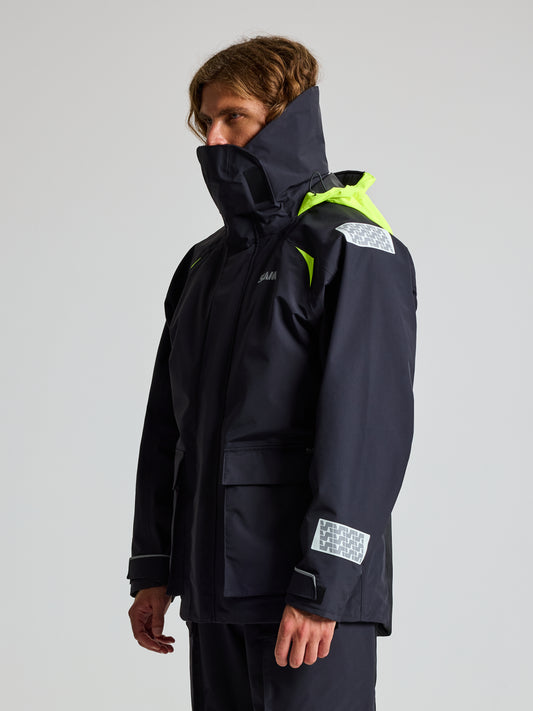
Para quienes navegan es fundamental contar con las prendas adecuadas para las condiciones que el mar nos puede presentar. Y la Pro Offshore Jacket protege contra viento, agua, sal y lluvia con su impermeabilidad de 15.000 mm, su capucha plegable de alta visibilidad y su cálido cuello alto forrado.
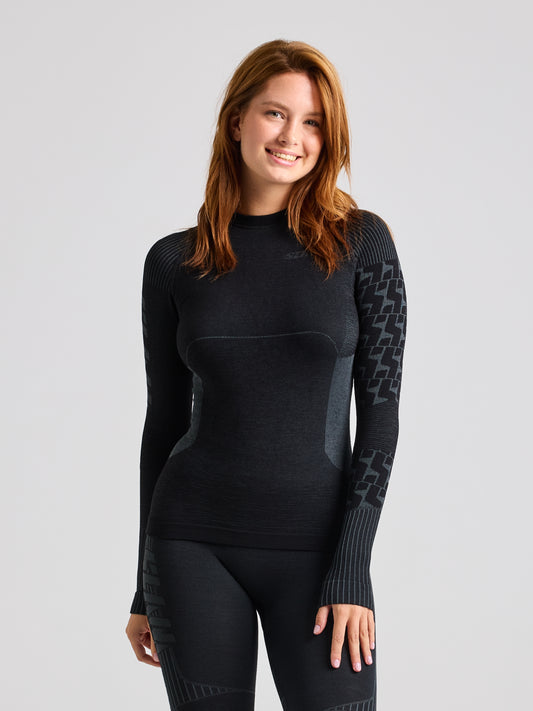
El jersey de manga larga Pro Seamless Merino Top LS es ideal para quienes saben lo importante que es llevar una prenda interior cómoda, ergonómica, de secado rápido y elástica. En hilado con mezcla de merino, produce una agradable sensación al contacto con la piel.
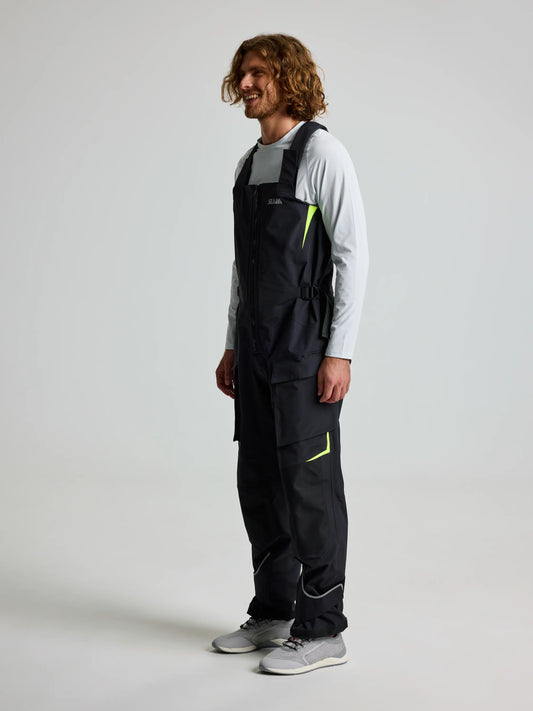
El Pro Offshore Bibs es un peto unisex confeccionado en material reciclado impermeable a 15.000 mm y transpirable, ideal para quienes buscan una prenda que se pueda utilizar a solas como protección de las piernas y el busto o combinada con una chaqueta.

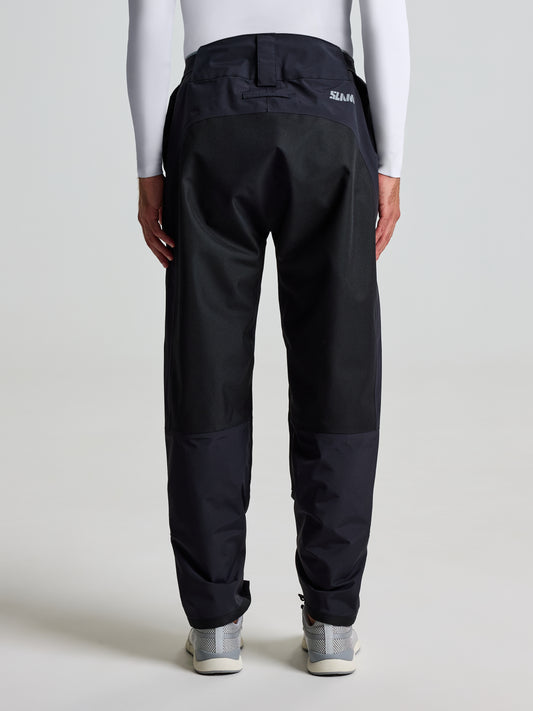
Práctico pantalón en tejido técnico de nailon de 2 capar, el Pro Offshore Pant es ideal para quienes buscan protección contra el agua, el viento y la lluvia en las extremidades inferiores sin el volumen de un peto.